Lobster Data Platform

Lobster integration for complex supply chains

When orders, invoices, shipments and stock data move between ERP, WMS, TMS, web shop and a growing number of trading partners, it is rarely a lack of data that holds you back. It is a lack of connected data.

Lobster integration brings EDI, APIs, file transfers and partner data together in one controlled integration layer instead of many separate point-to-point connections. SublimTech is a Lobster Platinum Partner and sees the job through, from the first mapping to stable, monitored operations.

  • 8 min read
Book a call about your integrations

What does manual document handling cost you?

Orders, invoices, delivery notes, confirmations. Anything keyed in or checked by hand
Keying, checking, filing and any follow-up
Salary plus pension, holiday pay and overheads, not just gross salary
What would it cost to have a language model read the same documents?
Rarely just one run: the answer is validated, a field is missing, and it runs again. The system prompt is sent every time
A language model does not answer the same way every time and does not say when it is wrong. Set the share to 0 if you pass everything straight on
The default is the price of a large model in September 2026. A page of text counts as 700 tokens, and the answer as half of what was read
Assumptions: adjust them if they do not fit your situation
Rarely 100. There are still exceptions, approvals and partners without EDI
£59,976saved per year
125hours saved per month
50errors avoided per month
Manual today147 h/month£5,880
With an AI language model8 h/month£373
After automation22 h/month£882

The hours shown for the AI language model are the time spent checking its answers, so all three bars measure the same thing: people’s time. For AI, the amount alongside also includes tokens, a total of £0.30 per document, of which £0.03 is tokens. That amount does not include the integration needed to fetch the documents and deliver the data into your systems, and the other two bars show working time, not licences.

The calculation is based only on the figures you have entered and the assumptions above. It is an estimate, not a quote or a guarantee.

Have the figures checked against your setup

Open the full ROI calculator

Lobster Value Added Reseller, Platinum Partner
40+ customers on the Lobster platform
10+ years of experience in data integration
99.6% uptime on Lobster Cloud
Lobster’s own figure
What is it?

Lobster integration in brief

In this context, Lobster is software: Lobster Data Platform from Lobster DATA GmbH. Lobster integration means using that platform as the central place where data is received, validated, translated, passed on and monitored. Instead of each system and each partner having its own connection, you get one integration layer and a single, shared overview.

Your system

JSONEDIFACT

Receiver

Business Central sends JSON via REST API. Retail chain requires EDIFACT via AS2. Lobster translates between them.

DocumentsORDERS in, ORDRSP, DESADV and INVOIC back

  1. ReceiveData is fetched or received over the partner’s own protocol.
  2. ValidateFields, formats and partner rules are checked before anything is passed on.
  3. TransformThe format is translated, and fields are enriched from master data.
  4. RouteThe message goes to the right recipient, and every step can be traced.

Without an integration layer, each of these combinations is built as a separate connection. With a single layer, validation, transformation and monitoring are reused across all of them.

Flows are built visually with drag and drop rather than hand-written code. That has a practical consequence that matters more than you might think: an integration that is modelled visually can be read, changed and taken over by people other than the one who built it. It is the difference between a solution the business owns and a solution that lives in one person’s head.

Lobster itself describes the platform as four interlocking areas: integration of internal systems, collaboration with trading partners via EDI, API and portals, orchestration of flows in which both automation and people play a part, and AI readiness, so the data is available to the tools that will need it in the future.

On top of all four comes traceability, and for companies with many external partners it often makes the biggest day-to-day difference. When an invoice has not arrived, you should not have to dig through log files on three servers to find out what happened. It should be something you can simply look up.

How Lobster processes data: the six phases of a profile

In Lobster Data Platform, integrations are built as what Lobster calls profiles. According to Lobster’s documentation, data passes through a profile in six main phases:

  1. 1. Input. An input agent receives the data.
  2. 2. Parsing. The data is parsed into the source structure.
  3. 3. Mapping. Rules transfer the data from the source structure to the target structure, and functions can modify it there.
  4. 4. Database. Data from the target structure can be written to a database.
  5. 5. Integration Units. These carry out specialised transformations after the mapping, for example converting the data to XML.
  6. 6. Output. The result is stored or sent on via what Lobster calls response paths.

Phases 2 to 5 are optional, and in principle so is phase 6: some profiles simply receive data and store it. For special cases there are also intermediate phases: a Preparser before phase 2, a Postparser straight after phase 2 and a Postexecuter after phase 5 or 6 for tasks such as Base64 encoding.

Who needs it?

When manual processes cannot keep up with growth

Most companies grow into integration complexity gradually. A new customer arrives with EDI requirements, then a new 3PL partner, then an extra sales channel, and each time the problem is solved where it appeared: a script, a file transfer, a portal login, a manual check.

Each fix makes sense on its own. Together they add up to a setup that nobody has a full overview of. If you recognise several of these signs, it is worth looking at Lobster integration:

  • Lots of customers, suppliers, carriers, 3PL partners or marketplaces to exchange data with
  • Manual EDI processes built on spreadsheets, portal logins and file uploads
  • Separate ERP, WMS, TMS, finance and e-commerce systems that do not talk to each other
  • New trading partners that take weeks or months to onboard
  • Recurring errors in order, invoice, shipping or stock data
  • No clear view of failed transactions and delayed documents
  • Older point-to-point integrations that only one person in the company can maintain
The problem

What do fragmented data flows cost?

Most companies do not know what their current integration setup costs, because it is not written down anywhere. It can be spread across departments: an hour a day on the order desk, the occasional wrong delivery and weeks of waiting every time a new supplier needs to get started.

When system integration is built as many separate connections between two systems at a time, the number of connections grows faster than the number of systems. Ten systems and twenty trading partners do not add up to thirty integrations. They add up to far more, because every combination of format, protocol and document type counts separately.

emailExcelportalre-keyingERPWeb shopWMSSupplierCustomerFinanceTMS3PLERPWeb shopWMSSupplierCustomerFinanceTMS3PLLobsterONE INTEGRATION LAYERemailExcelportalWeb shopERPWMSFinance3PLCustomerWeb shopERPWMSFinance3PLCustomerLobsterONE INTEGRATION LAYER
The same systems and partners. On the left, how it often looks today: point-to-point connections, several of them manual. On the right, the same landscape with Lobster as a single integration layer. Drag the handle to compare.

An integration platform such as Lobster takes a different approach from traditional point-to-point solutions. Rather than making each connection quicker to build, it moves the connections into one layer with shared rules for validation, transformation, error handling and monitoring. Supply chain integration then becomes something you control centrally, not something that emerges as a side effect of many small projects.

Systems and flows

What can be connected?

Lobster is built for mixed IT landscapes, where modern cloud services and older systems have to work side by side. Typical systems include:

  • Microsoft Dynamics 365 Business Central and Finance & Operations
  • Microsoft Dynamics NAV and AX
  • Visma and other finance systems
  • SAP, Oracle and NetSuite
  • WMS and warehouse systems
  • TMS and carrier systems
  • Web shop, marketplace and PIM
  • POS and in-store systems
  • CRM platforms
  • 3PL and partner portals
  • IoT devices and machine data
  • Legacy systems

The formats and protocols matter just as much, because your partners decide for themselves how they want to exchange data. One customer requires EDIFACT, another ANSI X12. A car manufacturer uses VDA, an SAP environment sends IDoc. A logistics partner drops files via SFTP or OFTP, a newer platform prefers a REST API, and a retail chain insists on AS2. Lobster supports all of them, including OPC UA for machine data, so it covers both classic EDI and modern API integration.

The point is not the list itself, but that you can say yes to a new partner without having to build a separate process from scratch every time.

Typical use cases

How Lobster is used in practice

EDI order processing

A customer order arrives as EDIFACT or X12, is validated, translated into your internal format and lands directly in your ERP system. The order confirmation, delivery note and invoice go back automatically in the format each customer requires. In the EDIFACT world that typically means ORDERS in and ORDRSP, DESADV and INVOIC out, but every retail chain has its own requirements for fields and validation, and that is exactly where centralised EDI integration pays off.

ERP integration

Partner data should not end up sitting in a folder on a server. Proper ERP integration means that external documents are linked to the right processes: sales orders, purchase orders, stock movements, delivery schedules and invoicing, so the data flows all the way into the business. We work mostly with Business Central, SAP and NAV.

Warehouse, transport and 3PL

Pick orders, stock levels, shipment status and tracking data are exchanged automatically between ERP, WMS, TMS and external 3PL warehouses. Every system shows the same picture, and customer service no longer has to ring round for a status update.

Partner onboarding

New trading partners are connected with reusable mappings, standard test procedures and Lobster’s Trading Partner Manager. Partners without their own EDI capability get access to a WebEDI portal instead, where they can view and confirm orders in the browser. That brings smaller suppliers into the automated flow too, without you having to maintain a manual workaround for each of them.

See one of the examples on film: the cold chain

A short film about Lobster Data Platform in an end-to-end cold supply chain. Click to play.

The case behind the film

The film illustrates the cold chain the case is about: meat on the conveyor belt, pallets, freezers and containers on their way out into the world. Behind it is a real project in Denmark, where SublimTech has built the integration between customers’ EDI and the warehouse system.

Build the right model once, and every new connection becomes a formality rather than a project.

Martin Bjorheim CEO and founder, SublimTech, on the solution at Constellation Cold Logistics Denmark

Constellation Cold Logistics Denmark, formerly Agri-Norcold, runs cold stores at ten locations in Denmark for food producers with strict traceability requirements. Customers’ EDI files used to be written straight into the warehouse system’s databases, customer by customer, and knowledge of each connection was held by individuals. SublimTech has rebuilt the landscape on Lobster with one canonical data model per message type: the customer’s format is translated into the shared model, and the shared model into the warehouse system’s format. Each link in the chain is a separate Lobster profile. On the same platform, Lobster now delivers reports the warehouse system cannot produce itself, controls freezers according to the hourly electricity price and sends veterinary certificates digitally to the Danish Veterinary and Food Administration via a partner.

Customer
Constellation Cold Logistics Denmark, cold stores at ten locations, part of Europe’s third-largest cold storage operator
Systems
Customers’ EDI via SFTP and API, Lobster Data Platform, Infor WMS
Solution
Canonical model for orders, shipping notices, receipts and adjustments, with traceability at pallet and carton level. Customer-specific logic lives in the customer’s own profile
Impact
A new customer means one mapping to the model. The target is onboarding in around two months, compared with six to eight months before, and changing the warehouse system does not touch the customer connections

Does one of these examples sound like your situation? Then a conversation about your specific systems and partners is usually the most useful next step.

Get help with Lobster integration
Changing platform

Migrating to Lobster from BizTalk, TrueCommerce, VAN and other platforms

Many of our projects do not start from scratch. They start with an EDI platform that has been running for years and now has to be replaced: Microsoft BizTalk, a managed EDI service such as TrueCommerce, a VAN provider that charges per message, or a custom-coded solution that only a few people understand. It is one of the areas we work on most.

For BizTalk, the timetable is set by Microsoft. BizTalk Server 2020 has mainstream support until April 2028 and extended support until April 2030, according to Microsoft’s lifecycle overview. The earlier the move is planned, the more of it can happen at your own pace.

If you are coming from a managed service such as TrueCommerce, the switch is rarely about something being broken. It is about who owns the integration layer. With a service provider, the mappings and partner connections sit with the provider. With Lobster, they live in your own environment, where you can see them and change them yourself or have us do it, and where the same layer also handles everything that is not EDI, such as APIs to a web shop or file transfers to the warehouse.

How a migration works

  • We map the existing flows: partners, formats, protocols and the special rules that have built up over the years.
  • The flows are rebuilt in Lobster and tested against real production files, not just against the documentation.
  • Partners are moved over one at a time while the old platform keeps running, so you do not have to switch everything overnight.
  • When the last connection has moved, the old solution is shut down, and you are left with one integration layer and all your monitoring in one place.

The benefit goes beyond the switch itself. Flows modelled visually in Lobster can be read and taken over by others, instead of living in code that only the original developer understands.

Portals

Supplier and WebEDI portals on Lobster

Not every partner can or wants to send EDI. A smaller supplier may have neither the system nor the people for it, and then orders end up in emails, spreadsheets or phone calls. A portal solves that without giving up the automation. The partner works in the browser, and the data lands in the same integration layer as the rest of your flows.

WebEDI portal

Partners without their own EDI see their orders, confirm them and send shipping notices and invoices in the browser. On your side it arrives like any other EDI document.

Supplier portal

Suppliers enter and maintain their own data, such as order confirmations, delivery dates and product data, instead of sending spreadsheets to a shared mailbox.

Self-service for partners

With Lobster’s Trading Partner Manager, partners manage their own access and certificates, so a new connection does not have to wait for your IT department.

The portals are built in Lobster Data Platform and use the same mappings, rules and monitoring as your other flows. A partner can therefore start in the portal and later move to full EDI without the flow into your ERP having to be rebuilt.

New in Lobster

API Management, orchestration, AI and MCP

Lobster is more than an EDI platform. Recent releases have brought the integration layer closer to both APIs and AI, which is exactly what many of the questions we get these days are about.

API Management

With Lobster’s API Manager, the whole lifecycle of your REST APIs is managed in one place, with per-partner access, versioning and documentation. You can expose data to customers and partners without running a separate API platform alongside it.

Orchestration

Flows in which automation and people work together: an order that needs approval, an exception that requires a decision, or a process with several steps across systems. Every step is visible and traceable.

AI and MCP

Lobster can make data from your systems, including older systems such as AS/400, available to AI agents via MCP (Model Context Protocol), with the same versioning and logging as an ordinary API. Lobster itself states that the first endpoint can be live in under a day.

Automapping

With Pathfinder Automapping, Lobster’s built-in AI suggests a mapping between source and target formats, with a confidence score on every field. The suggestion is reviewed and corrected before it is used, so a person stays in control.

Digitalisation and AI readiness

We also help with the projects that need to come first: working out which data sits where, making it structured and accessible, and assessing where AI and automation will actually pay off. Lobster calls this AI readiness, and it is often the first step before a specific AI project makes sense.

Results

What difference does it make in practice?

The figures below are Lobster’s model calculation: a typical integration portfolio built the traditional way compared with the same portfolio on Lobster over three years. A real-world example: Lobster customer Lindt & Sprüngli cut its time to value by 60%. Exactly how much your business stands to gain depends on how much is handled manually today, which is what we establish in the discovery phase.

78% lower total costs
over three years, Lobster’s model calculation
90% lower cost per integration
67% lower staff costs
1.5 days average training time

Source: Lobster’s model calculation over three years (78%, 90% and 67%) and Lobster’s own figure for training time. Results vary from company to company; we are happy to talk you through the basis for the calculation.

What our customers say

See all reviews on Trustpilot
  • What really sets SublimTech apart is their ability to get to grips with complex integrations quickly and find practical solutions, even when unforeseen challenges come up. We get expert advice, quick responses and consultants who take ownership of the job from start to finish.

    Pierre Damgaard RømerDespec5 out of 5 stars on Trustpilot, July 2026
  • At PanzerGlass we have had nothing but positive experiences working with SublimTech. When IT solutions are delivered quickly, efficiently and thoroughly, everyone involved wins, and that has been our experience with every one of SublimTech’s consultants.

    Michel GhazalehPanzerGlass5 out of 5 stars on Trustpilot, July 2026
  • They are clearly experts in integration, and in their field in general. They deliver high-quality solutions, meet agreed deadlines and are also a valuable sounding board when it comes to advice and developing new solutions.

    Emil Lykkegård5 out of 5 stars on Trustpilot, July 2026

Translated from Danish. The original reviews are on Trustpilot.

Four customers in their own words

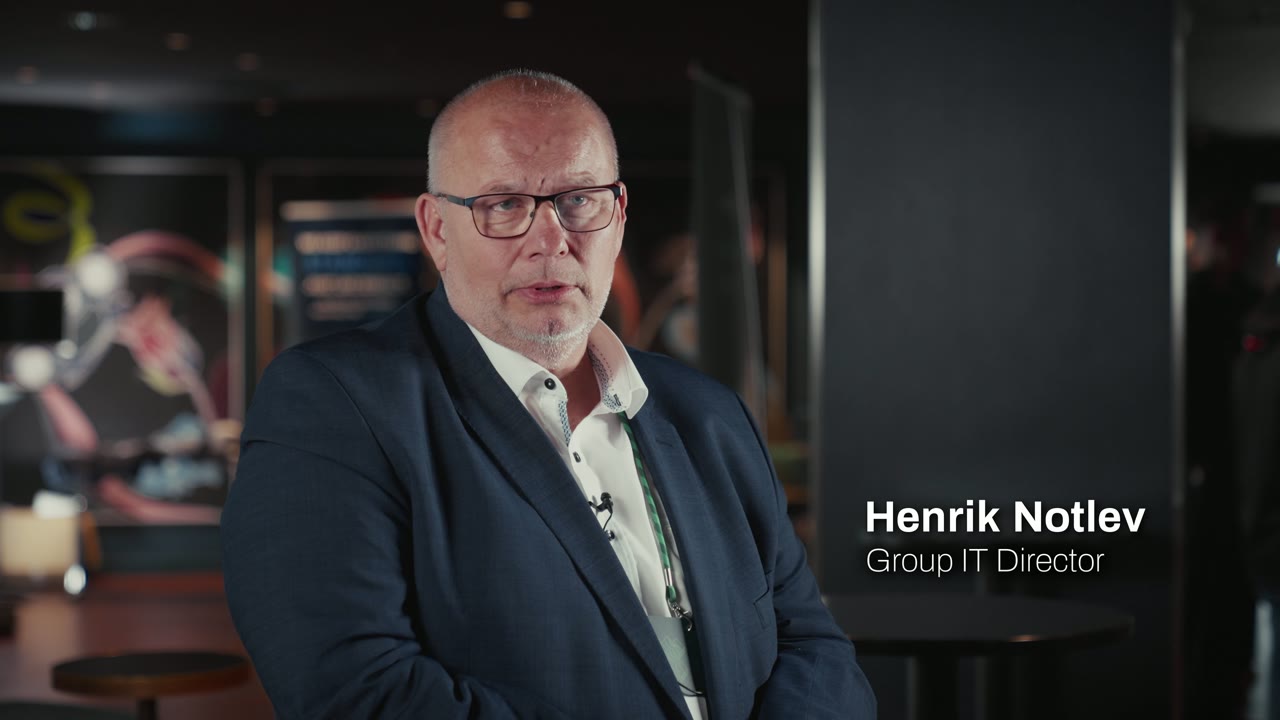
Why Lobster became a strategic choice, how the customers’ own departments now build integrations themselves, and what they use us for. Just over a minute and a half, in Danish and Swedish with English subtitles.

The benefit of Lobster integration rarely shows up in one place. It shows up as lots of small things that no longer cost time: the call about the missing order, correcting the wrong item number, waiting for a new partner.

And it shows up as you grow. A setup that starts with one connection to one customer can be extended to several hundred trading partners without having to be rebuilt along the way.

Run your own numbers

Averages say little about your particular business. Try your own figures here, or open the full calculator, which explains each field.

Open the full ROI calculator

Orders, invoices, delivery notes, confirmations. Anything keyed in or checked by hand
Keying, checking, filing and any follow-up
Salary plus pension, holiday pay and overheads, not just gross salary
What would it cost to have a language model read the same documents?
Rarely just one run: the answer is validated, a field is missing, and it runs again. The system prompt is sent every time
A language model does not answer the same way every time and does not say when it is wrong. Set the share to 0 if you pass everything straight on
The default is the price of a large model in September 2026. A page of text counts as 700 tokens, and the answer as half of what was read
Assumptions: adjust them if they do not fit your situation
Rarely 100. There are still exceptions, approvals and partners without EDI
£59,976saved per year
125hours saved per month
50errors avoided per month
Manual today147 h/month£5,880
With an AI language model8 h/month£373
After automation22 h/month£882

The hours shown for the AI language model are the time spent checking its answers, so all three bars measure the same thing: people’s time. For AI, the amount alongside also includes tokens, a total of £0.30 per document, of which £0.03 is tokens. That amount does not include the integration needed to fetch the documents and deliver the data into your systems, and the other two bars show working time, not licences.

The calculation is based only on the figures you have entered and the assumptions above. It is an estimate, not a quote or a guarantee.

Have the figures checked against your setup
Operating model

Run it yourself or let us handle it?

An integration layer is not a project with an end date. New partners, new format requirements and new systems come along, and something will fail along the way, typically when a trading partner changes something without telling you.

That is why the operating model is worth deciding on from the start. We work with both models, and the choice depends on how much integration expertise you want to have in-house.

In-house

You own the platform and the day-to-day operation. SublimTech implements it, trains your team and is on hand as your specialist when needed.

Managed

SublimTech monitors, fixes and develops your integrations as your dedicated partner. You get the integrations as a service rather than as a task.

Read about managed integration services

How SublimTech helps

From the first flow to stable operations

SublimTech is a Lobster Platinum Partner with more than 40 customers on the platform and over ten years of experience in supply chain data integration. We do not take on a whole integration landscape in one go. We start where the manual work is greatest and build from there.

  1. Discovery
  2. Design and mapping
  3. Connections
  4. Testing and onboarding
  5. Go-live and operations
Phase 1 of 5

Discovery and solution design

We map systems, partners and document types and agree which flows to build first.

What we do

  • Map your systems, trading partners, document types and volumes
  • Prioritise flows by where the manual work and the errors are greatest
  • Choose how to run it: Lobster Cloud or on-premises, and how to reach systems behind your firewall
  • Write up the solution design so everyone knows what is being built and in what order

What you provide

  • A list of partners, document types and the systems to be connected
  • Examples of current files, EDI agreements and partner requirements
  • Access to the system owners who know the data and the processes
  • A decision-maker who can set priorities

Where Lobster comes in

  • Lobster Cloud or an on-premises installation
  • Lobster Bridge for systems behind the firewall
  • A licence with standard features and users included

Outcome of this phase: A solution design with flows in priority order and a plan for the first go-live.

Phase 2 of 5

Flow design and mapping

Each flow is modelled visually in Lobster, with validation, transformation and error handling built in from the start.

What we do

  • Build profiles and mappings in Lobster’s no-code editor
  • Define validation rules, enrich data and set the routing for each partner
  • Build in error handling: what happens when a document cannot be processed
  • Document every mapping, so people other than us can read and change it

What you provide

  • A subject-matter expert who knows your item numbers, units and pricing logic
  • Test data: real orders, invoices and shipments from everyday operations
  • Answers to questions about business rules while we build

Where Lobster comes in

  • Drag-and-drop Data Mapping
  • Functions and Transformation for calculations and look-ups
  • The format library: EDIFACT, ANSI X12, IDoc, XML, JSON and CSV

Outcome of this phase: Mapped and documented flows, ready for testing.

Phase 3 of 5

Configuration and connections

ERP, WMS, TMS and partners are connected with the protocols and certificates each party requires.

What we do

  • Set up connections to your ERP: Business Central and F&O via API, SAP via IDoc and RFC
  • Connect WMS, TMS, web shop and finance system via files, API or database
  • Set up partner connections over AS2, SFTP or OFTP2, with certificates and acknowledgements
  • Secure access with user management, single sign-on and two-factor authentication

What you provide

  • IT access, firewall rules and service accounts for the systems
  • Certificates and connection details from your partners
  • A technical contact at your company or your hosting provider

Where Lobster comes in

  • The connectivity layer with AS2, OFTP2, SFTP, web services and SAP ALE
  • Trading Partner Manager for partner details and certificates
  • Lobster Bridge for on-premises systems

Outcome of this phase: All connections set up and verified in the test environment.

Phase 4 of 5

Testing and partner onboarding

Each flow is tested end to end with real documents and signed off with each trading partner.

What we do

  • Run end-to-end tests with real test documents in both directions
  • Test with each trading partner and correct mappings based on their feedback
  • Keep a test log recording what was approved and by whom
  • Make the tests repeatable, so later changes can be verified in minutes

What you provide

  • Sign-off of test results by your specialists
  • Liaison with your partners’ EDI teams when they need to test
  • A decision on the go-live date for each partner

Where Lobster comes in

  • Mapping Test Management for repeatable tests
  • Trading Partner Manager: self-service onboarding with automatic connection tests
  • Separate test and production environments

Outcome of this phase: Approved flows for each partner, ready for production.

Phase 5 of 5

Go-live, training and operations

Flows go into production partner by partner, your people are trained, and operations are monitored closely from day one.

What we do

  • Move flows to production partner by partner, not all at once
  • Monitor the first few weeks closely and deal with any issues while routines bed in
  • Train your own people on the platform and hand over the documentation
  • Continue with a managed service or a support agreement if you wish

What you provide

  • A decision on the operating model: in-house, managed by us or something in between
  • An internal owner for the integrations, even when we run them
  • A heads-up when new partners, systems or document types come along

Where Lobster comes in

  • Dashboards and alerts on failed transactions
  • Traceability for every single message
  • Short training: Lobster itself estimates a day and a half

Outcome of this phase: Stable operations, an overview of every message, and the ability to build the next flow yourselves.

Our track record

Supply chain integration
10+ years
ERP systems (Business Central, Dynamics F&O, NAV, SAP)
8+ years
EDI and API architecture
7+ years
Lobster Data Platform
6+ years

We work closely with your own IT and business people along the way. An integration layer that only the supplier understands is not a solution. It is a new dependency. That is why we document flows, mappings and error handling, so you can always take ownership back in-house if you want to.

Lobster is often at the heart of the solution, but rarely the whole picture. Most projects also involve EDI integration with specific trading partners and wider ERP integration between internal systems, and they fit together best when they are planned at the same time rather than separately.

FAQ

Frequently asked questions about Lobster integration

What is Lobster software?

In an IT context, Lobster is Lobster Data Platform from Lobster DATA GmbH: an integration platform that connects business systems and trading partners via EDI, APIs, file transfers and portals. Flows are built visually with drag and drop rather than as hand-coded custom solutions, which makes them quicker to change and easier for new colleagues to take over. Today, more than 2,000 companies in logistics, manufacturing and trade use the platform.

What is the difference between Lobster integration and classic EDI?

Classic EDI covers the exchange of structured documents such as orders and invoices with trading partners. Lobster handles EDI but goes further, also covering API integration, file transfers, IoT and machine data, databases, internal system integrations and workflows with human approval. In practice, this means you can bring partner data and internal system integration together in one platform instead of two.

Which standards and protocols does Lobster support?

Lobster supports the common standards in supply chain integration: EDIFACT, ANSI X12, VDA, IDoc, XML, JSON, CSV and flat files, exchanged via AS2, OFTP, SFTP, REST and SOAP APIs, as well as OPC UA for machine data. The platform can run in the cloud or on your own servers, with SSO, two-factor authentication and access control.

How long does a Lobster implementation take?

It depends on the number of systems, partners and document types. We recommend starting with one clearly defined flow, typically the one that costs the most manual hours today, and taking it live before the next ones are connected. That way you see value early, and the experience from the first flow makes the next ones faster.

Can you take over an existing Lobster installation?

Yes. We are happy to take over the operation and further development of an existing setup. We always start with a review of mappings, error handling, monitoring and documentation, so you get a clear picture of what is stable and what should be tidied up before we build any further.

Can Lobster be integrated with SAP and Microsoft Dynamics?

Yes. SAP, Microsoft Dynamics 365, Business Central and NAV are among the most common ERP systems in our projects, and the platform supports standard interfaces, APIs, IDoc, file-based transfers and database connections. The same applies to WMS, TMS and finance systems.

Do we need to employ our own integration specialist?

No. Some customers want to own and run the platform themselves, and in that case we train and support their team. Lobster itself estimates a day and a half of training. Others prefer managed integration services, where SublimTech takes care of monitoring, troubleshooting and further development. Both models work. What matters most is that the choice is made deliberately rather than by default.

Can you move us from BizTalk or a VAN provider to Lobster?

Yes, it is one of the areas we work on most. We map the existing flows, rebuild them in Lobster and move the partners over one at a time while the old platform keeps running. For BizTalk Server 2020, Microsoft’s mainstream support ends in April 2028 and extended support in April 2030.

Shall we take a look at your Lobster setup?

Tell us which systems, partners and document types are involved, and we will get back to you with a clear assessment of where to start.

Contact SublimTech